Questions that matter to fleet operators.
that fleet operators really ask.
Find answers to the most common questions about RaceTools Truck Performance, the practical trial, fuel savings, installation and Fleet Rental.
01 · TECHNICAL & SAFETY
01 What is RaceTools Truck Performance? +
RaceTools Truck Performance is designed to improve the operating economics of commercial vehicles. Its focus is on reducing fuel consumption and directly improving your fleet’s ongoing cash flow.
02 How much fuel can be saved? +
Under suitable conditions, average fuel savings of up to 12% may be possible. Actual savings depend on the vehicle, operating profile, driving style, load and route.
03 Will RaceTools change my day-to-day vehicle operations? +
RaceTools is designed for normal day-to-day operations. During the trial, the vehicle remains in regular fleet service and is assessed under real operating conditions.
04 Is RaceTools safe for my vehicle? +
The technical implementation is vehicle-specific. Before use, the vehicle type and technical configuration are checked to ensure the solution is suited to that vehicle.
02 · WHICH TRUCKS ARE SUITABLE?
05 Which trucks are compatible with RaceTools? +
RaceTools is designed for a range of commercial vehicles, with a current focus that includes MAN and Mercedes-Benz. Other vehicle types and manufacturers can be assessed depending on the model and technical configuration.
06 Can RaceTools be used with different truck models? +
Yes. A vehicle-specific assessment is generally possible. Suitability depends on the model, engine and technical configuration of the vehicle.
07 Can I use RaceTools across a mixed fleet? +
This is generally possible, provided the individual vehicles are technically suitable. Each model is assessed for compatibility.
03 · TRIAL & REAL-WORLD RESULTS
08 Can I try RaceTools first? +
Yes. You can trial RaceTools on one vehicle for four weeks in normal day-to-day operation, giving you real data from your own fleet.
09 How much does the four-week trial cost? +
The practical trial costs €1.50 per day. This keeps the initial commitment low and lets you assess the solution under real operating conditions.
10 How are the savings measured? +
The assessment is based on actual vehicle use and relevant operating data, such as fuel consumption, mileage and operating conditions. The key question is: what does your vehicle actually save?
11 What happens after the four-week trial? +
After the trial, the results are reviewed. You can then decide whether to expand RaceTools to additional vehicles, and to how many.
04 · COSTS & RENTAL PLAN
12 How much does RaceTools Fleet Rental cost? +
The Fleet Rental plan starts at €149 per month. It lets you integrate RaceTools into day-to-day fleet operations without a large one-off investment.
13 Why is the rental plan attractive? +
The rental plan lowers the barrier to entry and makes ongoing costs predictable. The financial benefit comes from reducing fuel costs and increasing liquidity in day-to-day operations.
14 When does RaceTools become worthwhile for my fleet? +
This depends on factors such as the number of vehicles, annual mileage, fuel consumption, diesel price and operating profile. An individual fleet analysis can estimate your specific savings potential.
15 Does it require a large upfront investment? +
No. The entry model is designed around cash flow, with a four-week trial and a monthly Fleet Rental plan.
05 · Flotten & Fuhrparks
16 Can I start by using RaceTools on just one vehicle? +
Yes. That is exactly what the four-week practical trial is designed for. Start with one vehicle and, if the results support it, extend the solution to additional vehicles.
17 From what fleet size does RaceTools make sense? +
This depends on the operating profile and ongoing fuel costs. A single vehicle can be used for the trial, followed by a gradual rollout.
18 Can RaceTools be scaled to additional vehicles? +
Yes. The approach is designed to scale from a single trial vehicle to smaller sub-fleets and larger fleets.
06 · SETUP & SERVICE
19 How does installation work? +
Installation is professional and vehicle-specific. The exact process depends on the model and technical configuration. Both self-installation and assisted setup are available.
20 Does the vehicle need to go to a workshop? +
No. The process does not require a workshop. We first assess what the vehicle needs and provide the appropriate unit.
21 How do I get started with RaceTools Truck Performance? +
- Fahrzeug bzw. Flotte auswählen
- 4-Wochen-Praxistest starten
- Verbrauch und Betriebsdaten erfassen
- Ergebnis auswerten
- Bei Bedarf auf weitere Fahrzeuge skalieren
Find out how much your truck could really save.
what your truck can really save.
VIEW FLEET ANALYSIS →
Liquidity beats profit.
Lower fuel consumption. Mehr operativer Cash Flow. Ohne hohe Anfangsinvestition.
SELECT TRUCK MODEL ↗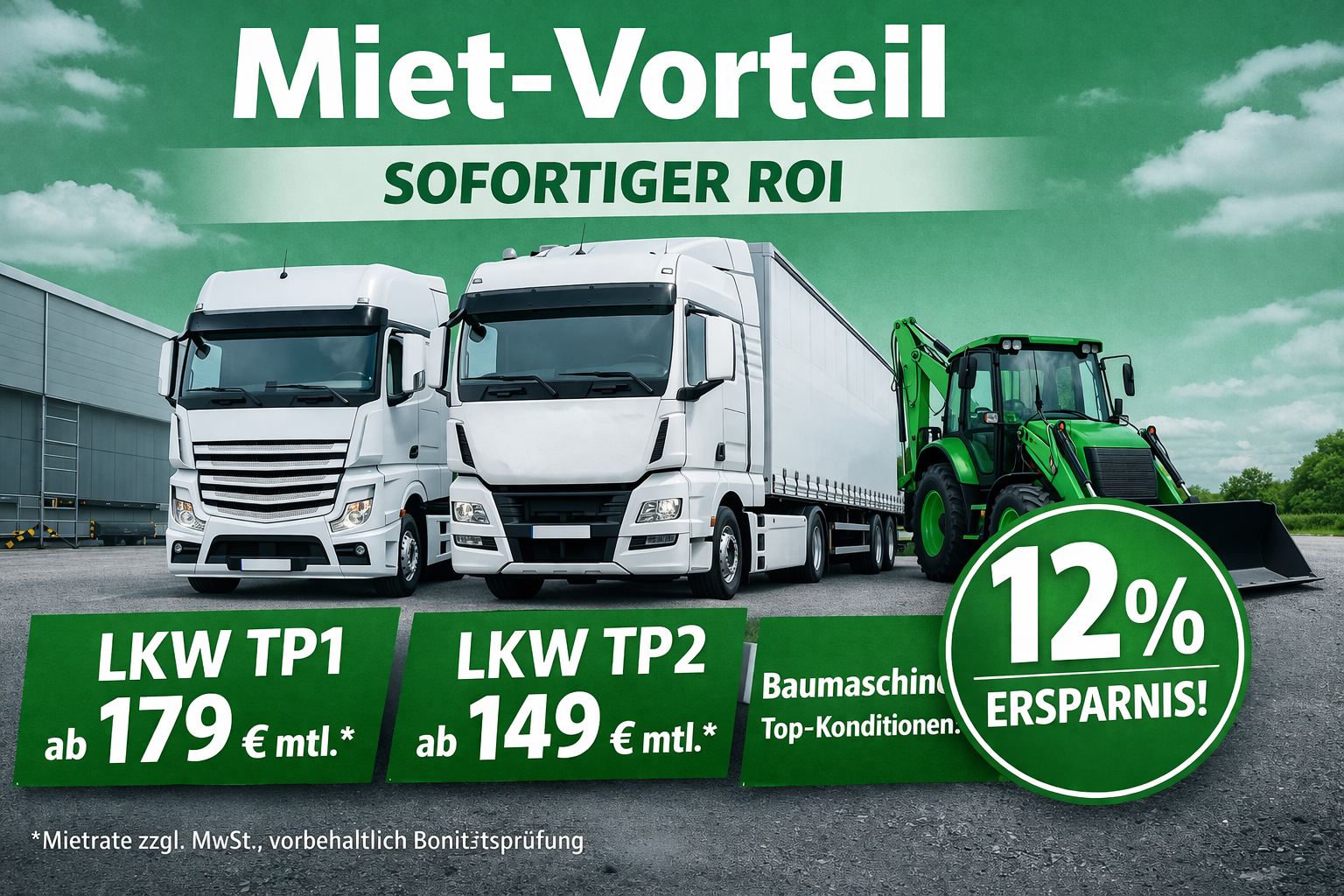
Illustration of potential savings of up to 12%. Actual results may vary.
Every litre counts.
Jeden Tag.
Energy costs (diesel/electricity) are among the largest variable costs in long-haul transport and a key factor that fleets can influence day to day. While freight rates are under pressure, energy prices and carbon pricing weigh on profitability. Every avoidable excess litre directly reduces your margin.
RaceTools Truck Performance combines precise performance optimisation with commercial efficiency. Designed for modern fleet operations, the technology reduces fuel consumption in day-to-day operations – without tying up additional capital to purchase the system, while integrating with existing operating processes.
At the right annual mileage, savings of up to €7,000* per vehicle per year may be possible. The benefits also include improved driving dynamics and everyday practicality. The focus is on lower long-term operating costs, improved operating cash flow and a measurable financial return.
Energy costs are among the largest operating cost factors.
Industry analyses of Germany’s transport and logistics market consistently rank fuel and electricity among the largest variable costs in road freight. Even modest efficiency improvements can directly affect fleet margins, cash flow and overall profitability.